
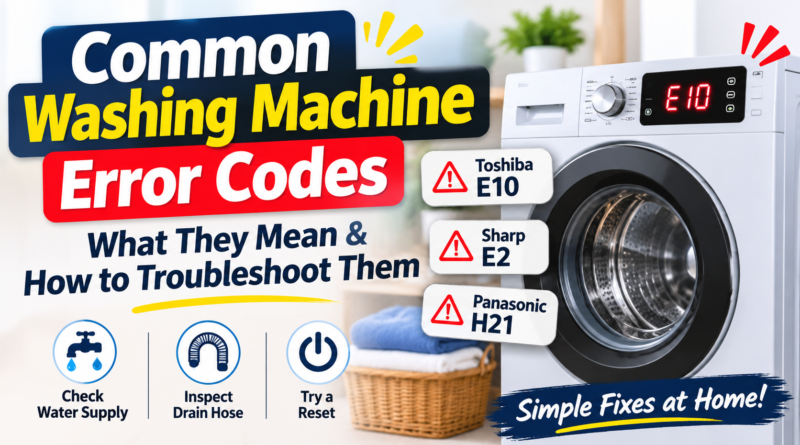
Common Washing Machine Error Codes: What They Mean and How to Troubleshoot Them
Modern washing machines make laundry much easier, but when an error code appears on the display, it can quickly become confusing. Instead of simply stopping the machine, many newer appliances show a combination of letters and numbers to indicate what may be wrong.
These codes are useful because they can help homeowners identify whether the problem is related to water supply, drainage, the door, sensors, or another component. However, an error code does not always mean that a major repair is required. In some cases, a simple check or reset can solve the issue.
Here are some common appliance error codes and practical troubleshooting steps you can try before calling a technician.
Why Do Washing Machines Display Error Codes?
A washing machine continuously monitors different components while running a cycle. Sensors check things such as water levels, temperature, door position, motor operation, and drainage.
If the control system detects something outside the expected range, it may stop the cycle and display an error code.
The exact meaning of an error code depends on the manufacturer and model. For this reason, it is important not to assume that the same code means the same thing on every washing machine.
Before troubleshooting, check the model number and consult the manufacturer’s instructions whenever possible.
Toshiba E10 Fill Error
A washing machine that displays an E10-related fill error may be having trouble getting enough water into the appliance. The problem can be caused by a closed water tap, restricted inlet hose, low water pressure, or a blocked inlet filter.
If your machine displays this type of error, start with a few basic checks:
- Make sure the water supply tap is completely open.
- Check the inlet hose for kinks or crushing.
- Make sure the hose connections are secure.
- Check whether the home’s water pressure appears normal.
- Inspect the inlet filter if the appliance’s manual provides instructions for doing so.
If everything appears normal but the machine continues to display the error, there could be an issue with the water inlet valve or a related sensor.
For more information about this particular problem, you can refer to this troubleshooting resource on Toshiba E10 fill error.
It is generally better to investigate the water supply first rather than immediately assuming that an internal component has failed.
Sharp E2 Error
Another error homeowners may encounter is the Sharp E2 error. Like other appliance codes, the exact meaning can vary depending on the washing machine model, so the model-specific documentation should always be checked.
If an E2 code appears, begin by stopping the machine and checking for obvious issues. Make sure the door is properly closed and that there is nothing preventing it from locking correctly.
You can also try switching the washing machine off, waiting for a few minutes, and then powering it back on. A temporary electronic fault can sometimes clear after a reset.
If the error returns immediately, avoid repeatedly starting the cycle. A persistent error usually indicates that the appliance needs further diagnosis.
You can find additional information about the Sharp E2 error and possible troubleshooting steps before deciding whether professional appliance repair is necessary.
Panasonic H21 Error
Panasonic washing machines can also display specific codes when the control system detects an abnormal condition. The H21 code is one example that may require further investigation.
When an H21 error appears, the first step should be to stop the machine and check the basic conditions around the appliance. Look for anything unusual such as excessive water, drainage problems, or a cycle that has stopped unexpectedly.
Do not dismantle electrical components or attempt to repair internal wiring unless you have the appropriate technical knowledge. Washing machines contain electrical connections and water, so improper repairs can create a safety risk.
For model-specific information, homeowners can review resources covering the Panasonic H21 error and compare the symptoms with the machine’s user manual.
When Should You Reset a Washing Machine?
A reset can be useful when an error appears because of a temporary electronic problem. The exact reset procedure differs between manufacturers, but a simple power cycle is often a reasonable first step.
Turn the washing machine off and disconnect it from the power supply if the manufacturer’s instructions allow this. Leave it powered down for several minutes before reconnecting it.
If the machine operates normally afterward, monitor it during the next complete cycle.
However, a reset should not be treated as a permanent repair. If the same error keeps coming back, the underlying problem still needs to be identified.
Simple Checks You Can Perform at Home
Before contacting an appliance repair professional, there are several safe checks that can help narrow down the problem.
Check the Water Supply
Make sure the water supply is turned on and that the inlet hose is not bent or blocked.
Check the Drain Hose
A blocked or incorrectly positioned drain hose can prevent a washing machine from completing a cycle properly. Inspect the hose for visible kinks or obstructions.
Check the Door
Many washing machines will not start or continue a cycle if the door is not properly closed or locked.
Avoid Overloading
An overloaded drum can cause unusual movement, poor washing performance, and other operational problems. Follow the load recommendations in your appliance manual.
Try a Safe Power Reset
If the manufacturer’s instructions permit it, switching the appliance off and restarting it may clear a temporary electronic fault.
When Professional Repair Is the Better Option
Basic troubleshooting is useful, but not every appliance problem should be handled at home.
Professional assistance is recommended when the error continues after basic checks, when the machine is leaking, when there is a burning smell, when electrical components appear damaged, or when internal parts need to be tested or replaced.
It is also important to avoid repeatedly running a machine that is making unusual noises or showing signs of an electrical or mechanical problem. Continuing to operate a faulty appliance can sometimes make the original problem worse.
Final Thoughts
Error codes are designed to make appliance troubleshooting easier by giving homeowners and technicians information about what the washing machine has detected.
The key is to treat the code as a starting point rather than automatically assuming that an expensive component has failed. Check the water supply, hoses, door, drainage system, and other simple possibilities first. If the error continues, consult the appliance manual or contact a qualified repair professional.
Most importantly, always use the error code together with the exact washing machine model. Manufacturer codes can differ between models, and the correct model-specific information can prevent unnecessary repairs and help you resolve the problem more efficiently.


