Landscaping Ideas That Complement Modern Home Design
Modern home design is often defined by clean lines, practical layouts, natural materials, and a strong connection between indoor and outdoor spaces. Landscaping plays an equally important role in creating that visual balance. The right landscape can soften a contemporary façade, frame architectural features, and turn an ordinary yard into an intentional extension of the home.
Whether you are designing a new property or updating an existing garden, the goal should not simply be to add more plants. Instead, think about how landscaping interacts with the architecture, materials, lighting, pathways, and everyday lifestyle of the people living there.
Here are several landscaping ideas that work particularly well with modern homes.
1. Keep the Landscape Simple and Structured
One of the easiest ways to complement modern architecture is to avoid an overly complicated landscape design. Contemporary homes tend to benefit from repetition, symmetry, and clearly defined spaces.
Instead of filling every corner with different plants, choose a smaller selection of species and repeat them throughout the property. This creates consistency and helps the landscape feel connected to the architecture.
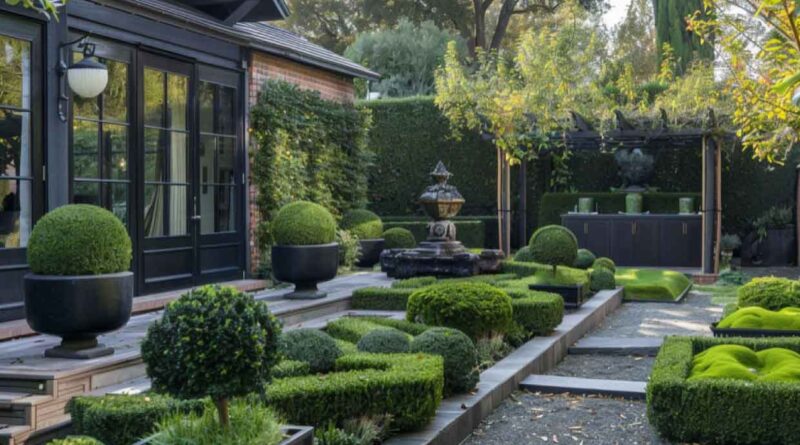
Geometric planting beds, straight pathways, rectangular lawns, and carefully positioned trees can reinforce the clean lines of a modern home. Even when the garden includes natural materials and lush vegetation, the overall layout can remain structured.
2. Use Native and Low-Maintenance Plants
A beautiful landscape should also be practical. Choosing plants that are suited to the local climate can reduce watering, pruning, and replacement requirements.
Ornamental grasses, shrubs, native flowering plants, and drought-tolerant species can introduce texture without making the garden feel chaotic. Evergreen plants can also provide year-round structure, while seasonal plants can add occasional color.
For a modern property, consider grouping plants in larger masses rather than scattering individual specimens throughout the yard. This approach creates a stronger visual statement and works particularly well with minimalist architecture.
3. Create a Strong Indoor-Outdoor Connection
Modern architecture often emphasizes large windows, sliding glass doors, patios, and outdoor living areas. Landscaping should reinforce that relationship rather than treating the garden as a separate space.
For example, a lawn or patio positioned directly outside the main living area can visually extend the interior. Matching or complementary materials between the house and outdoor spaces can strengthen the connection.
A stone patio might echo the color of the home’s exterior walls, while timber decking can complement wood accents used around windows or doors. Planting beds can then soften the transition between hard architectural surfaces and the surrounding landscape.
4. Add Geometric Hardscaping
Hardscaping is particularly effective around contemporary homes because it introduces strong shapes and defined boundaries.
Consider using large-format concrete pavers, natural stone slabs, gravel paths, retaining walls, or minimalist steps. Instead of complicated decorative patterns, focus on simple lines and proportions.
A rectangular pathway leading from the driveway to the front entrance, for instance, can emphasize the home’s geometry. Similarly, a series of oversized stepping stones through a lawn can create a modern visual rhythm.
Hardscaping can also divide a large outdoor area into functional zones for dining, entertaining, gardening, and relaxation.
5. Use Trees as Architectural Elements
Trees are more than sources of shade. When positioned carefully, they can become an important part of the architectural composition.
A single sculptural tree can provide a focal point in a minimalist courtyard. Rows of trees can create privacy or frame a pathway, while larger canopy trees can soften a box-shaped building.
When selecting trees, consider their mature size rather than focusing only on how they look when planted. A tree that eventually grows too close to the building can create maintenance and structural problems.
The best placement considers views from inside the house as well. A carefully positioned tree outside a living-room window can turn an ordinary view into a living landscape.
6. Introduce Water Without Overcomplicating the Design
Water features can work beautifully with modern architecture when they are kept simple.
A narrow reflecting pool, linear fountain, or small geometric water feature can create movement and sound without overwhelming the landscape. Water can also reflect the home’s architecture, making it especially effective in courtyards and outdoor entertaining spaces.
For smaller properties, even a compact water feature can create a focal point. The key is to make sure its proportions and materials complement the surrounding architecture.
7. Design Outdoor Lighting as Part of the Architecture
Landscaping should not disappear after sunset. Thoughtful outdoor lighting can highlight architectural and landscape features while making outdoor areas more usable.
Path lights can define walkways, uplighting can emphasize trees, and subtle wall lighting can highlight textures on exterior surfaces. Recessed or concealed fixtures can maintain the minimalist appearance associated with contemporary design.
Avoid using too many different types of fixtures. A consistent lighting strategy generally produces a more sophisticated result.
Lighting should also be planned around outdoor seating, entrances, steps, and other areas where visibility is important.
8. Choose a Lawn That Supports the Overall Design
The lawn can act as a visual counterbalance to modern architecture. A broad, uninterrupted area of grass provides a soft natural surface against concrete, stone, metal, and glass.
However, maintaining that clean appearance can require regular mowing. This is particularly noticeable when the landscape design depends on sharply defined lawn edges and consistent grass height.
For homeowners who want the appearance of a meticulously maintained lawn without spending every weekend behind a mower, a robot mower can be an appealing solution.
Robot Mowers for Effortless Lawn Upkeep
Robot mowers are designed to automate routine lawn cutting, allowing homeowners to spend less time on maintenance. Many modern models can follow schedules, return to a charging station, and use different navigation technologies depending on the design of the property.
When choosing one, lawn size, navigation system, slopes, cutting performance, and smart features are important considerations. LawnRobotHQ’s current buying guidance recommends selecting a mower with a working-area rating comfortably above the actual lawn size and paying particular attention to slope capability on uneven properties.
For homeowners comparing different models, LawnRobotHQ offers independent robot mower reviews, rankings, and buying advice. Its 2026 rankings compare models based on specifications, real-world feedback, navigation, lawn capacity, slope handling, and value.
You can also read the full comparison to compare models side by side before deciding which mower fits your landscape.
9. Create Privacy With Plants and Screens
Modern homes often feature large windows, which can create beautiful views but may also reduce privacy. Landscaping can solve this without making the property feel enclosed.
Tall ornamental grasses, evergreen hedges, bamboo alternatives, carefully positioned trees, and architectural screens can provide privacy while maintaining an open atmosphere.
Rather than surrounding the entire property with a solid wall of greenery, consider creating privacy only where it is needed. This preserves views and allows natural light to reach the home.
10. Make Maintenance Part of the Design
A successful landscape is not just attractive on installation day. It should remain manageable as plants mature and the seasons change.
Think about irrigation access, pruning requirements, drainage, lawn care, lighting maintenance, and pathways before finalizing the design. A landscape that looks spectacular but requires hours of work every week may not be practical for every homeowner.
Modern landscaping is increasingly about creating spaces that look intentional while reducing unnecessary maintenance. Simple planting palettes, efficient irrigation, durable hardscaping, and automated lawn care can all contribute to that goal.
Bringing Architecture and Landscape Together
The strongest modern landscapes feel like a natural continuation of the house. Rather than designing the building first and adding landscaping as an afterthought, consider the two as parts of one composition.
Use plants to soften hard architectural lines, hardscaping to extend the geometry of the home, trees to frame important views, and lighting to connect the property after dark. At the same time, choose practical solutions that make the landscape easier to maintain.
A well-designed garden does not need to be complicated. In many cases, the most successful modern landscapes rely on a few strong ideas: clean geometry, carefully selected plants, thoughtful materials, and purposeful outdoor spaces.
When those elements work together, the result is a home that feels complete from every angle — not just from the front door, but from the garden, patio, windows, and outdoor living areas as well.