Reframing the View: A Complete Guide to Window and Door Upgrades
Your home’s windows and doors do far more than keep the weather out. They shape how light enters every room, define the architectural character seen from the street, regulate energy efficiency year-round, and contribute significantly to how secure and comfortable your family feels inside. Yet for many homeowners, the process of choosing new windows and doors — or simply understanding what they already have — feels overwhelming. With dozens of styles, materials, glazing options, and hardware choices available today, the decisions can pile up quickly.
This guide is designed to cut through that noise. Whether you are planning a full home window replacement in Chicagoland, scouting ideas for a new build, or simply curious about the options available from professional windows and doors replacement companies, you will find clear and practical information here. We cover the most popular window styles — from casement windows and picture windows to awning windows and bay windows — as well as entry door options that balance beauty with durability. Along the way, we touch on Warmdreams – windows and doors, a resource worth exploring if you want further inspiration.
For more inspiration on beautiful window and door designs, check out this excellent article: https://www.beautiful-houses.net/2025/11/reframing-view-window-and-door.html
Why Window and Door Replacement Is One of the Smartest Home Investments
Before diving into styles and specifications, it helps to understand why replacing windows and doors ranks so consistently high among home improvement projects in terms of return on investment. Unlike a kitchen remodel or bathroom renovation — which can run tens of thousands of dollars and deliver variable resale returns — window and door replacement tends to offer a combination of immediate comfort gains, noticeable energy savings, and meaningful curb appeal improvement.
In the Chicago metropolitan area and its surrounding suburbs, the climate adds an extra layer of motivation. Winters can be punishing, with windchill temperatures that expose the weak points in any outdated single-pane window very quickly. Summers bring humidity and heat that stress old seals, warp wooden frames, and make air conditioning work overtime. Homeowners pursuing home window replacement in Chicagoland are not just chasing aesthetics — they are solving real, daily problems: drafts, condensation between panes, difficulty opening or closing windows, and energy bills that seem to climb every year.
Beyond comfort, updated windows and doors signal to prospective buyers that a home has been maintained carefully. In competitive real estate markets, properties with newer, high-quality windows and attractive entry doors often command stronger offers and spend less time listed. The curb appeal factor alone — especially with a striking entry door or a dramatic bay window — can shift a buyer’s first impression from neutral to enthusiastic.
Casement Windows: Classic Functionality Meets Modern Performance
Among all the window styles available today, casement windows consistently earn top marks from both homeowners and design professionals. The fundamental design is simple: a single sash hinged on one side — either the left or the right — that swings outward when a crank handle at the base or side is turned. This seemingly modest mechanism delivers a surprisingly impressive set of benefits.
The most significant advantage of casement windows is their airtight seal. Because the sash presses firmly against the frame when closed, there are fewer gaps for air to penetrate compared with double-hung windows, which rely on a sliding mechanism. In cold climates like the Chicago region, this translates directly into better thermal performance and lower heating costs. The same tight seal also makes casement windows exceptionally good at blocking outside noise — a notable benefit for homes near busy roads, rail lines, or commercial corridors.
Ventilation is another strength. When fully open, a casement window exposes the entire sash area to incoming air, which means maximum cross-ventilation on warm days. The outward-opening design also functions as a natural wind scoop, directing breeze into a room rather than deflecting it sideways as some other window styles do.
From a design standpoint, casement windows complement a wide range of architectural styles. Their clean vertical lines work naturally with craftsman bungalows, colonial revivals, and contemporary homes alike. They are available in single-pane configurations for modern, streamlined facades, or with divided lites — small grids or muntins — for a more traditional look. Frame materials include vinyl (low maintenance, excellent insulation), fiberglass (the most dimensionally stable option, ideal for extreme temperature swings), wood (the warmest aesthetic, requiring more upkeep), and aluminum (slim profiles, very durable).
One consideration with casement windows is that they require clear exterior space to swing open, which makes them less suitable for locations above a porch, walkway, or patio where an outward-swinging sash could become a hazard. They also are not generally compatible with window air conditioning units. These limitations aside, casement windows remain one of the most versatile and high-performing window styles on the market.

Picture Windows: Bringing the Outdoors In
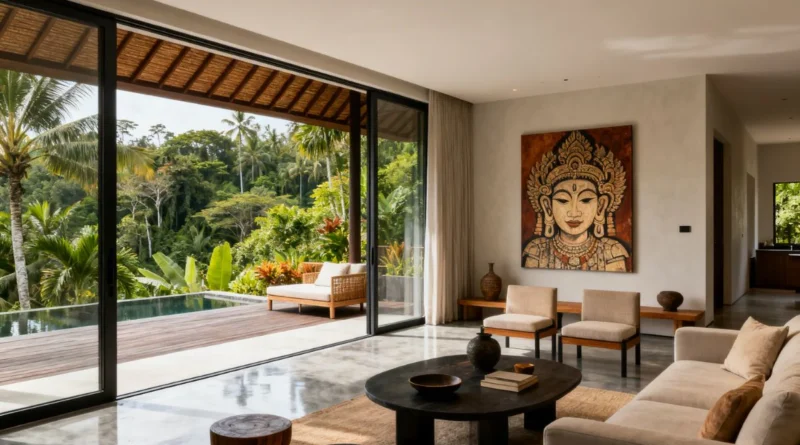
If casement windows are prized for their ventilation, picture windows represent the opposite design philosophy: maximizing the view and the light, with no moving parts at all. A picture window is essentially a large, fixed pane of glass — often panoramic in scale — framed in minimal trim and designed to frame a view the way a painting frames a scene on a wall.
The name itself says everything about the intent. Picture windows are about creating a visual connection between interior spaces and the landscape outside: a wooded backyard, a lake, a mountain range, or even a well-tended garden. In urban and suburban settings, they can transform an otherwise ordinary room into a space that feels expansive and filled with natural light.
Because picture windows have no sash, no hardware, and no moving components, they offer several structural advantages. The glass area can be larger than almost any other window type, since there is no need to accommodate mechanical operation. They are also among the most airtight window configurations available, with no tracks or hinges to develop leaks over time. From an energy efficiency standpoint, a modern picture window with low-emissivity (low-e) glass and insulated glazing can perform exceptionally well, reducing heat gain in summer and heat loss in winter.
The obvious trade-off is ventilation: picture windows do not open. In practice, most designers and homeowners address this by pairing picture windows with operable windows nearby — casement or awning windows flanking a central picture unit, for example. This combination delivers the visual impact of a large glass expanse while still allowing fresh air to circulate.
Picture windows are also relatively straightforward to maintain, since there are no moving parts to adjust, lubricate, or repair. Cleaning the exterior glass is the most demanding aspect of upkeep, which can be more challenging for very large units installed above the first floor. Some manufacturers offer tilt-in options for easier cleaning, though this feature is more common in double-hung configurations.
Awning Windows: The Underrated Workhorse
Less celebrated than casement or bay windows, awning windows are nonetheless one of the most practical choices available — particularly for rooms where ventilation and weather protection need to coexist. Hinged at the top and opening outward from the bottom, awning windows function exactly as their name suggests: the open sash acts like a small awning, shielding the interior from rain while still allowing air to flow in.
This feature makes awning windows uniquely useful in wet or unpredictable climates. Homeowners can leave them open during light rain without worrying about water entering the room — the angled sash directs precipitation downward and away from the sill. In the Chicago region, where spring and summer storms can arrive with little warning, this is a genuinely practical advantage.
Awning windows are frequently installed in bathrooms, kitchens, and basements — locations where ventilation is important but privacy is also a priority. Placed high on a wall, an awning window allows fresh air circulation and natural light without compromising privacy, since the sightlines through a high, horizontally oriented window are limited from outside.
Like casement windows, awning windows create a tight seal when closed, pressing the sash against the frame. This makes them an excellent choice for energy-conscious homeowners. They also pair naturally with other window styles: an awning window placed above or below a picture window creates a combination unit that offers both a clear view and operable ventilation. Similarly, a row of awning windows along the upper portion of a wall can complement larger fixed or casement windows below.
The crank mechanism used to operate awning windows is similar to that of casement units and generally durable over time. Because the hinge is at the top, the mechanical stress is distributed differently than in casement windows, and the design is generally less prone to sagging over years of use. For spaces where a casement window’s outward swing might be an issue, an awning window often presents a workable alternative.
Bay Windows: Architectural Drama and Functional Space
Few window configurations make as strong an architectural statement as bay windows. Projecting outward from the main wall of the house, a bay window creates a small alcove inside the room and a striking visual feature on the exterior. The classic configuration uses three window panels: a large central panel (often fixed) flanked by two angled side panels, typically set at 30 or 45 degrees from the wall plane.
The interior benefits of a bay window are substantial. The projection — even when relatively shallow — adds usable floor space that can accommodate a built-in window seat, a reading nook, a small desk, or simply a display area for plants or decorative objects. The angled side panels capture light from multiple directions, making rooms feel brighter and more dynamic throughout the day as the sun moves across the sky.
Architecturally, bay windows are most strongly associated with Victorian and Edwardian homes, where elaborate projecting bays were a signature exterior feature. In those styles, the bay might span two or even three floors and incorporate decorative trim, cornices, and patterned glass. In contemporary design, bay windows tend to be simpler — clean frames, minimal trim, and large glass areas — but the fundamental projection and multi-angle configuration remain.
Installation of bay windows is more complex than standard window replacement, since the structure projects beyond the exterior wall and requires proper support from below (a knee wall or corbels) and a separate roof or cap above. For this reason, bay window installation is a project best left to experienced contractors. When done well, the result is one of the most distinctive and value-adding features a home can have.
Energy performance in bay windows requires careful attention. The projecting structure creates more exterior surface area relative to the interior space compared with a flat wall, and the angled side panels introduce additional framing that can be a weak point for thermal bridging. Modern bay windows address this with insulated frames, thermally broken aluminum or fiberglass construction, and high-performance glazing throughout. Proper installation with appropriate insulation in the knee wall and overhead structure is equally important.
Entry Doors: The Face of Your Home
If windows define how a home looks across its entire facade, the front door defines the focal point. Entry doors are the handshake between your home and the world — the first thing guests touch, the last thing you see when leaving for work. A well-chosen entry door communicates personality, signals quality, and sets the tone for everything inside.
The market for entry doors is broad, spanning materials, styles, hardware, glass inserts, sidelights, and transom configurations. Understanding the key material choices is a good starting point.
Wood Entry Doors
Wood remains the gold standard for warmth and visual richness. A solid mahogany, oak, or cherry entry door has a weight and presence that no other material fully replicates. Wood doors can be painted, stained, or clear-coated, and they accept custom carving and decorative detailing that enhances period-appropriate homes. The trade-off is maintenance: wood expands and contracts with temperature and humidity, requires periodic refinishing, and is more susceptible to moisture damage than other materials. In a climate like Chicagoland’s, with its wide seasonal temperature swings, wood entry doors need consistent upkeep to maintain their appearance and performance.
Steel Entry Doors
Steel doors offer excellent security, dimensional stability, and a reasonable approximation of wood’s visual character when embossed with panel details and finished with paint. Modern steel entry doors feature a polyurethane foam core that provides good insulation — often better than solid wood — and they resist warping, cracking, and splitting. They do require repainting over time and can dent if struck by hard objects, but for sheer durability and security value per dollar, steel is difficult to beat.
Fiberglass Entry Doors
Fiberglass has become the dominant choice in the premium entry door segment, and for good reason. Modern fiberglass doors can be embossed with wood grain texture so convincingly detailed that the surface is difficult to distinguish from real wood at arm’s length. Fiberglass does not warp, crack, swell, or rot. It accepts paint and stain and holds finishes well. Insulated fiberglass doors also deliver among the best energy performance of any entry door material. For homeowners who want the look of wood without the ongoing maintenance, fiberglass is the logical choice.
Glass Inserts and Sidelights
Entry doors are frequently specified with glass inserts — decorative or clear panes set into the door panel — and sidelights, which are narrow vertical windows flanking one or both sides of the door. These elements add natural light to entryways, which can otherwise feel dark and enclosed, and they create a more open, welcoming visual effect from the street. Privacy glass, leaded glass, and frosted patterns allow light to enter while limiting visibility from outside. Transom windows — horizontal glass panels set above the door — extend the light-gathering capacity further and add vertical drama to the entrance.
Home Window Replacement in Chicagoland: What to Expect
For homeowners in the greater Chicago area ready to move forward with window replacement, understanding the process helps set realistic expectations and avoid common frustrations. Professional windows and doors replacement is not simply a matter of pulling out old frames and inserting new ones, though for some projects that description is not far off. The complexity depends on the scope of work, the condition of the existing framing, whether the window openings are being resized, and the types of windows being installed.
Assessment and Selection
The process typically begins with an in-home assessment from a contractor or window company representative. A thorough assessment includes measuring each existing opening, evaluating the condition of surrounding trim and framing, identifying any moisture damage or structural concerns, discussing style and performance priorities with the homeowner, and providing a detailed written estimate. This is the stage where homeowners should be asking questions about frame materials, glass packages, warranty coverage, and the company’s installation practices.
Permits and HOA Considerations
Depending on the municipality and the scope of the project, window replacement may require a building permit. This is more commonly required when window openings are being enlarged or when structural work is involved, but some jurisdictions require permits even for like-for-like replacement. Homeowners in communities governed by a homeowners association should also check whether exterior changes — including window style, color, or grille patterns — require approval before work begins.
Installation Day
Most window replacement projects proceed one window at a time: the old window is removed, the opening is inspected and prepared, the new window is set and shimmed level and plumb, fastened through the frame, insulated around the perimeter, and then trimmed out. A professional crew can typically replace multiple windows in a single day. The interior disruption is relatively modest — furniture near each window needs to be moved temporarily, and some dust and minor debris are inevitable, but the work is generally contained to the immediate area of each window opening.
Post-Installation Care
After installation, homeowners should inspect each window carefully for operation, seal integrity, and trim finish. Screens should be tested, locks and hardware should operate smoothly, and any visible gaps at the interior trim should be pointed out to the contractor. Most reputable companies conduct a post-installation walkthrough and address any punch-list items before leaving the job site.
Warmdreams – Windows and Doors: A Resource for Style and Performance
For homeowners seeking a curated source of inspiration and product information, Warmdreams – windows and doors offers a range of resources for understanding both the aesthetic and technical dimensions of window and door selection. Whether browsing for design ideas, researching energy performance ratings, or comparing product lines, having a reliable reference point makes the selection process considerably more manageable.
The breadth of options in today’s window and door market can genuinely overwhelm homeowners who approach the process without a framework. Knowing the key style categories — casement, picture, awning, bay, double-hung, slider — and understanding the basic performance distinctions between frame materials and glass packages allows homeowners to engage more productively with contractors and showroom staff. It also reduces the risk of making a decision that looks appealing in a brochure but performs poorly in practice.
The most successful window and door projects are those where the homeowner has done some preliminary research, arrived at a rough sense of their priorities — whether that is maximum energy efficiency, a particular aesthetic, ease of maintenance, or budget — and then worked collaboratively with a knowledgeable contractor to translate those priorities into specific product selections and installation practices.
Matching Window and Door Styles to Your Home’s Architecture
One of the most common mistakes homeowners make when replacing windows is selecting a style that works in isolation but clashes with the home’s broader architectural character. A sleek, floor-to-ceiling casement window with no grilles may look stunning in a modern magazine spread but feel jarring on a Victorian-era craftsman bungalow. Conversely, heavily divided traditional double-hung windows can look fussy and outdated on a clean-lined contemporary home.
Matching window and door styles to architecture does not require slavish historical accuracy, but it does benefit from some basic alignment between the window proportions, the grille patterns (if any), the hardware finish, and the home’s overall character. Here are some general principles that experienced designers follow:
For colonial and traditional homes: Double-hung windows with six-over-six or nine-over-nine divided lites are the natural choice. Entry doors in raised-panel configurations with sidelights and a transom maintain the formal symmetry typical of this architectural tradition. Brick red, deep navy, or forest green doors with polished brass or oil-rubbed bronze hardware feel authentic and grounded.
For craftsman and bungalow-style homes: Casement windows with simple horizontal or art glass grille patterns complement the handcrafted aesthetic. Entry doors with glass inserts featuring prairie-style geometric patterns are period-appropriate. Earth tones — warm browns, olive greens, and deep burgundy — suit the craftsman palette.
For mid-century modern homes: Horizontal ribbon windows, picture windows, and sliding glass doors that blur the boundary between inside and outside are architectural hallmarks of this era. Simple, flat-panel entry doors with minimal hardware maintain the clean geometry. Walnut stain, matte black, and charcoal are natural color choices.
For contemporary and transitional homes: Almost any well-made window works, but the emphasis is on simplicity, maximum glass area, and refined hardware. Black aluminum frames are currently very popular for their graphic, industrial quality. Large-format pivot doors or steel-and-glass entry doors make a strong contemporary statement.
Energy Efficiency: What the Numbers Mean
Window and door selection involves a vocabulary of performance ratings that can confuse homeowners encountering it for the first time. Understanding the key metrics makes it easier to compare products and ask informed questions.
U-Factor: This measures how well a window or door resists heat flow. Lower U-factor numbers indicate better insulating performance. In cold climates like the Chicago area, a U-factor of 0.30 or below is generally recommended for windows.
Solar Heat Gain Coefficient (SHGC): This measures how much solar radiation passes through the glass. Lower SHGC values mean less solar heat entering the home. In climates with hot summers and cold winters, the ideal SHGC depends on orientation: south-facing windows in passive solar designs may benefit from a higher SHGC to capture winter sun, while west-facing windows that receive intense afternoon sun typically benefit from a lower value.
Visible Transmittance (VT): This measures how much visible light passes through the glass. Higher VT values mean more natural light. Low-e coatings, which reduce heat transfer, can sometimes reduce VT, though modern coatings are increasingly able to maintain high VT while delivering excellent thermal performance.
Air Leakage (AL): This measures how much air passes through the window assembly under standardized pressure conditions. Lower numbers are better. Well-made casement and awning windows, because they press the sash against the frame when closed, typically deliver excellent air leakage ratings.
ENERGY STAR Certification: Products meeting ENERGY STAR criteria have been independently verified to meet performance thresholds for a given climate zone. For most homeowners, ENERGY STAR certification is a reliable baseline indicator of energy efficiency and provides a straightforward shorthand for comparing products.
Hardware, Finish, and the Details That Elevate the Whole
In any well-executed interior or exterior design, the details are where the difference between good and exceptional lives. Window and door hardware — handles, locks, hinges, pulls, and knobs — occupies precisely this territory. These are the components that hands touch every day, the elements seen at close range, and the finishing punctuation that either reinforces or undermines the overall design.
For windows, hardware choices are somewhat constrained by the window type and manufacturer, but there is still meaningful variation in finish options. Brushed nickel, polished chrome, oil-rubbed bronze, matte black, and antique brass are the most common choices. The key is consistency: hardware finishes that match or intentionally contrast with interior door hardware, plumbing fixtures, and light fixtures create a more deliberate and polished interior environment.
For entry doors, hardware selection is considerably more expansive. Handlesets, deadbolts, door knockers, house numbers, mail slots, and exterior lighting fixtures all contribute to the entry’s overall composition. Contemporary design trends favor clean-lined, minimal hardware in matte black or brushed stainless. Traditional homes typically suit more ornate hardware in warmer metallic finishes. The weight and feel of the handle when grasped — something that can only be evaluated in person, not online — is worth paying attention to, since it contributes to the tactile impression of quality that a well-made entry door should convey.
Making the Decision: Working With a Contractor You Can Trust
No amount of research fully substitutes for working with a skilled, reputable contractor who brings genuine expertise and honest communication to the project. The professional windows and doors replacement industry, like many home improvement sectors, includes companies of widely varying quality. Identifying the right partner requires due diligence.
Recommendations from neighbors, friends, or family who have recently completed similar projects are the most reliable starting point. Online reviews can supplement personal referrals but should be read critically — look for patterns across multiple reviews rather than placing weight on any single testimonial. A contractor’s willingness to provide references from recent clients and to allow prospective customers to visit a completed project site is a meaningful signal of confidence in their work.
During the bidding process, multiple written estimates allow meaningful comparison. Be cautious of estimates that arrive very quickly without a thorough site visit, since accurate pricing depends on careful measurement and assessment of existing conditions. Unusually low bids often reflect corners being cut on materials, installation practices, or warranty support — none of which serve the homeowner’s interests over time.
Ask about the contractor’s warranty coverage, which should address both the products themselves (typically covered by the manufacturer) and the installation labor (covered by the contractor). Installation warranty periods of at least two to five years are reasonable expectations from reputable companies. Understand what the warranty covers and, critically, what it excludes before signing any contract.
Final Thoughts: Windows and Doors as an Investment in How You Live
The windows and doors of a home are not merely functional enclosures. They determine how morning light falls across a kitchen table, how clearly you can hear rain on the glass during a quiet evening, how welcoming your front entry feels to arriving guests, and how much of your heating and cooling bill disappears through gaps and poorly performing glass. Choosing them well — with attention to style, performance, material quality, and skilled installation — is an investment that pays dividends every single day.
Whether your focus is home window replacement in Chicagoland, exploring the offerings of professional windows and doors replacement specialists, finding inspiration through resources like Warmdreams – windows and doors, or simply learning more about the differences between casement windows, picture windows, awning windows, bay windows, and entry doors, the information in this guide is a starting point — not a final destination.
The best next step is always the same: walk through your home and look at your existing windows and doors with fresh eyes. Notice where light is blocked, where drafts appear in winter, where frames show signs of wear, and where the street view of your home could be more compelling. Those observations will guide the conversation with a contractor more effectively than any specification sheet.
The combination of thoughtful research and skilled professional partnership is what transforms a window and door project from a routine home maintenance task into a genuine improvement in how you experience your home every day.